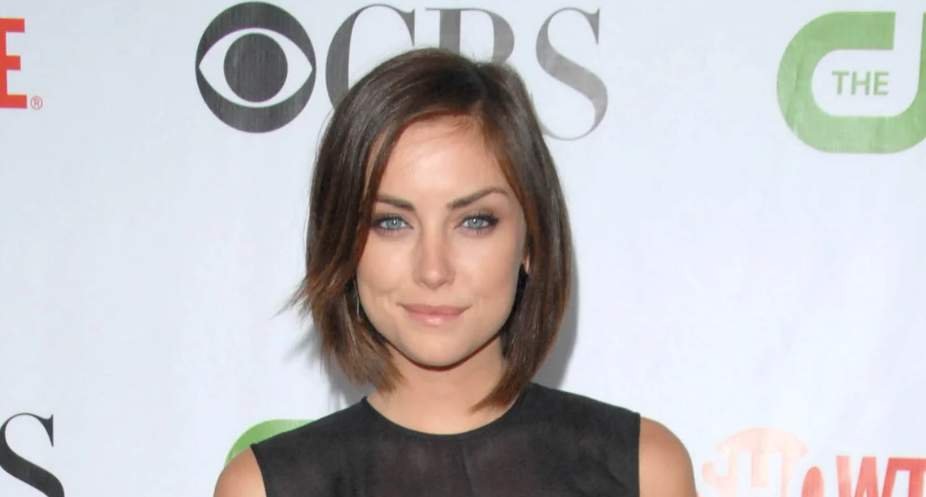
The media production landscape, as of mid-2025, is a vibrant tapestry woven with threads of innovation, particularly those spun by advanced AI technologies. Amidst this rapid transformation, actors like Jessica Stroup find themselves at a fascinating crossroads, where traditional performance artistry intersects with cutting-edge digital tools. This evolution invites a unique lens through which to consider the Critical Reception and Performance Analysis of Jessica Stroup's Work—not merely her past filmography, but her forward-thinking engagement with the new era of AI-augmented artistry.
At a Glance: Jessica Stroup's AI Integration
- AI's Role in Acting: AI isn't replacing actors, but reshaping workflows, offering new creative avenues, and acting as a co-creator or production assistant.
- ReelMind.ai's Impact: Platforms like ReelMind.ai provide advanced tools (AI video models, multi-image fusion, AI director Nolan) that empower actors.
- Stroup's Proactive Stance: Her career demonstrates adaptability, a mindset crucial for embracing AI innovation rather than resisting it.
- Redefining "Performance Analysis": It now includes how actors leverage AI for script analysis, character consistency, digital avatars, and skill development.
- The Critical Conversation: Reception will likely span excitement for new possibilities to concerns over authenticity, ethics, and job displacement.
- Actionable Strategy: Actors must proactively learn, experiment, and integrate AI transparently to thrive in this evolving environment.
The Shifting Sands of Stardom: Embracing AI in Performance
For decades, the craft of acting has relied on an immutable set of human skills: emotion, presence, vocal delivery, and nuanced physicality. Yet, as advanced AI steps onto the stage, these foundational elements are finding powerful new partners. The question is no longer if AI will impact acting, but how leading artists will harness its potential to expand their reach and deepen their art. Jessica Stroup, known for her compelling roles from the intricate high school drama of "90210" to the gritty world of "Iron Fist," embodies an actor whose adaptability positions her uniquely to navigate this technological frontier.
A New Paradigm for Creative Expression
Platforms like ReelMind.ai are at the vanguard of this revolution, offering an expansive toolkit that democratizes advanced creative capabilities. Imagine an actor having access to over 101 AI video generation models, from the cinematic quality of Flux and Runway Gen-4 to the realism of OpenAI Sora and Kling AI. These aren't just parlor tricks; they represent sophisticated instruments for storytelling. Features like multi-image fusion, for instance, ensure unprecedented character consistency across scenes, styles, and themes—a boon for maintaining a cohesive performance across various digital outputs.
Crucially, ReelMind.ai introduces Nolan, touted as the world's first AI Agent Director. This isn't about replacing human vision, but augmenting it with intelligent scene composition, narrative structure guidance, and automated cinematography suggestions. For an actor like Stroup, this means new collaborative possibilities, allowing her to experiment with creative interpretations, visualize scene blocking, and even refine her own performance choices in ways previously unimaginable without a full crew. The inclusion of an AI-powered sound studio, offering voice synthesis and background music generation, further cements these platforms as comprehensive creative hubs.
Jessica Stroup's Trajectory: Adaptability as a North Star
From her breakthrough as Erin Silver in "90210" to her work in films like "The Invisible" and "Prom Night," and later as Joy Meachum in Netflix's "Iron Fist" and an FBI agent in "The Following," Stroup's career has been marked by versatility. This history of embracing diverse roles and genres is not merely a testament to her acting range, but a signal of a deeper, strategic adaptability. This mindset, as the industry now understands, is precisely what aligns an artist with the rapid pace of AI innovation.
Her engagement with AI, therefore, isn't just about using a new tool; it's about extending her artistic ethos into a digital realm. It signifies a proactive choice to understand, experiment with, and ultimately leverage these technologies to augment her craft, create new types of content, and engage with audiences in novel ways. This approach, rather than passive observation, will be a significant factor in how her "AI work" is received and analyzed. To truly appreciate her evolution, it’s worth taking a moment to Explore Jessica Stroup’s work across her impressive traditional career.
Analyzing the "AI Performance": A New Critical Lens
When we talk about "performance analysis" in the context of Jessica Stroup's AI work, we’re expanding beyond the traditional critique of a live or filmed portrayal. We're delving into how she, or any actor, strategically deploys AI as a force multiplier for their talent. This means evaluating the effectiveness of AI integration in enhancing character depth, consistency, and reach, as well as its role in opening up new avenues for creative expression.
The Actor as Architect: Using AI for Enhanced Craft
Imagine Stroup preparing for a role. AI tools can now process entire scripts to identify thematic patterns, map out character arcs, and even highlight subtle dialogue nuances and emotional subtext that might otherwise be missed. This isn't about replacing human interpretation, but enriching it. An actor could use AI to generate hypothetical scene interpretations, exploring various emotional deliveries or physical choices before ever stepping onto a set. This shifts the actor's role slightly, making them an architect of their performance, using AI to test and refine their blueprints.
Furthermore, AI platforms are evolving into personalized acting coaches. They can analyze vocal delivery, facial expressions, and body language, providing objective, data-driven feedback that complements human coaching. For an actor dedicated to continuous skill development, this offers a private, repeatable training ground for honing specific techniques or developing specialized acting models based on their unique style.
Consistency and Control: Multi-Image Fusion and Digital Avatars
One of the most powerful applications of AI for actors is its ability to maintain character likeness and consistency. Multi-image fusion, a feature of platforms like ReelMind.ai, allows for the creation of consistent character keyframes across diverse scenes, styles, and themes. For Stroup, this could mean ensuring her digital likeness, or a specific character's digital avatar, maintains precise visual and behavioral consistency whether it's for a social media campaign, a metaverse experience, or even a deepfake in a future project where her younger self is needed.
The rise of lifelike digital representations and performance capture blurs the lines between physical and digital performance. Actors can participate in creating their own digital avatars, which can then be replicated or extended across various projects or fan engagement initiatives. This opens up entirely new monetization streams and ways for actors to connect with their audience, maintaining their presence in multiple digital realms simultaneously. The "performance" here isn't just the initial capture, but the meticulous deployment and consistency of that digital representation.
The AI Director as Collaborator: Nolan's Role
Nolan, ReelMind.ai's AI Agent Director, offers a glimpse into a truly collaborative future. For an actor, this means a partner that can provide intelligent scene composition, suggest narrative structure adjustments, and offer automated cinematography ideas. Stroup could hypothetically feed Nolan her performance capture data, or even just detailed descriptions, and receive immediate visual feedback on how her character fits into various stylistic choices or directorial visions.
This collaborative role means an actor isn't just reacting to a human director's instructions, but actively co-creating with an AI that can rapidly prototype visual concepts. It empowers the actor with a more direct hand in the overall narrative and aesthetic, potentially leading to a deeper understanding of the entire production process and more informed performances.
Critical Reception of AI Integration in Acting
The critical reception of actors embracing AI is a multifaceted dialogue, reflecting both immense enthusiasm for technological progress and profound anxieties about its implications. For an actor like Jessica Stroup, her proactive engagement with AI will undoubtedly elicit a spectrum of responses from peers, critics, and the public.
Opportunities and Acclaim: The Innovator's Edge
On one hand, there's the innovator's advantage. Actors who effectively integrate AI into their workflow���whether for personal development, content creation, or digital asset management—are seen as forward-thinking. Critics and industry observers might praise Stroup for her strategic approach, recognizing that she is augmenting her human creativity rather than succumbing to automation. Her ability to leverage AI for script analysis, character consistency, or even generating new demo reels could be seen as a shrewd move that enhances her marketability and creative output.
The democratization of advanced creative tools, facilitated by platforms like ReelMind.ai, also garners positive attention. It allows a wider range of individuals and independent projects to achieve high production values, potentially fostering a new wave of diverse storytelling. An actor championing this accessibility could be celebrated for expanding the creative ecosystem.
Navigating Skepticism and Ethical Concerns
However, the advent of AI in acting is not without its detractors and legitimate concerns. A significant portion of the critical conversation revolves around authenticity. Questions arise: Does an AI-assisted performance diminish the "human" element of acting? Are actors ceding too much creative control to algorithms? There's a natural human resistance to anything perceived as artificiality creeping into a deeply human art form.
Ethical considerations are paramount. Issues of copyright, intellectual property rights, and the potential for AI-generated content to perpetuate biases are hot topics. For an actor's digital avatar or AI-trained model, who owns the rights to its likeness or performance? What if AI generates content that misrepresents the actor or is used in projects they did not authorize? These are complex legal and ethical minefields that will shape public and critical reception. The fear of job displacement, while perhaps an oversimplification of AI's current role, is also a valid concern among many in the industry, leading to skepticism about AI's ultimate impact.
The Transparency Imperative: Building Trust in AI-Assisted Art
Perhaps the most crucial aspect influencing critical reception will be transparency. Actors and creators who openly communicate their use of AI tools, and more importantly, how those tools augment their human creativity, are more likely to build trust with their audience and the industry. If Jessica Stroup uses AI to generate concept visualizations for a role or to refine a digital avatar, clearly stating that these are AI-assisted creations, rather than presenting them as purely human-generated, will be key to fostering positive reception.
This transparency extends to ethical guidelines. Actors who actively engage in discussions about responsible AI use, contributing to the development of best practices within their unions and professional organizations, will likely be viewed as leaders. The critical dialogue isn't just about the output of AI, but the process and intent behind its deployment.
Practical Framework for AI-Augmented Acting (Inspired by Stroup's Approach)
For actors inspired by the adaptability seen in Jessica Stroup's career, integrating AI doesn't have to be overwhelming. It's a strategic process that augments human creativity, rather than replacing it. Here’s a pragmatic five-step framework:
Step 1: Deep Dive into AI's Potential
Begin by familiarizing yourself with core AI concepts, especially those relevant to media production. Understand the functionalities of platforms like ReelMind.ai, its credit systems, and its community features. Think of this as script analysis for a new kind of role: grasping the underlying mechanics and possibilities. It's not about becoming a coder, but a savvy user.
Step 2: Mastering the AI Toolkit (e.g., ReelMind.ai)
Create an account on an accessible AI video generation platform. Explore its interface, tutorials, and key features. Start with the basics: experiment with text-to-video or image-to-video functionalities using models like Pika 2.2 or MiniMax Hailuo 02. Get comfortable with the prompt engineering—the art of giving clear, effective instructions to AI. Practice using AI directorial agents like Nolan to see how it interprets your creative input.
Step 3: Creative Experimentation with AI Models
Once you're familiar with the basics, push your boundaries. Experiment with a wider array of models. Test premium series like Flux for higher quality and control, or explore multi-image fusion to maintain character consistency across different generated scenes. This is where you start to see AI as a true co-creator, allowing for rapid prototyping of visual concepts, character mood boards, and even short scene pre-visualizations.
Step 4: Elevating Craft with Advanced AI Features
This step involves moving beyond simple generation to specialized applications. Explore how AI can assist with script analysis, identifying nuances in dialogue or character motivation. Use AI-powered coaching modules to get personalized feedback on your vocal delivery or emotional expressions. For those technically inclined, learning about training and publishing personal AI models based on your unique acting techniques or digital likeness can open up new frontiers for bespoke content creation.
Step 5: Curating an AI-Integrated Portfolio
As you generate AI-assisted content, strategically incorporate it into your professional portfolio. This might include AI-generated demo reels, concept visualizations for character pitches, or digital avatars. Crucially, always maintain transparency about your AI use. Clearly label AI-generated or AI-assisted content, explaining how AI was used to enhance your creative vision, demonstrating not only your artistic skill but also your forward-thinking adaptability. This transparency is key to building trust and credibility in the evolving industry landscape.
Measuring Success and Impact in the AI Era
How do actors, especially those venturing into AI-augmented work, measure their success? Traditional metrics like box office numbers or critical reviews still hold weight, but the AI era introduces new, more granular ways to assess impact.
Beyond Traditional Metrics: New Ways to Gauge Engagement and ROI
- Creative Output Quality: Are the AI-generated concept visualizations compelling? Does the AI-assisted script analysis lead to deeper character interpretations? Quality here refers to the artistic merit and effectiveness of the AI's contribution.
- Efficiency Gains: How much time was saved in pre-production by using AI for storyboarding or scene visualization? Did AI coaching accelerate skill development? Efficiency translates to more time for creative refinement and reduced production costs.
- Audience Engagement: For AI-generated or AI-integrated content, track metrics like views, likes, shares, and comments. Are audiences responding positively to digital avatars or AI-assisted fan content? This gauges the resonance of new creative avenues.
- Monetization Potential: If actors are training and publishing their own AI models or creating digital assets, track credit earnings from platforms, or revenue generated from licensing digital likenesses or content. This speaks to the tangible return on investment from AI integration.
Optimizing strategies based on these diverse metrics will be crucial. An actor like Jessica Stroup, by meticulously tracking these new forms of success, can continually refine her approach to AI, ensuring it remains a powerful tool for artistic growth and career longevity.
The Road Ahead: Future Projections for Actors and AI
The current moment (July 2025) is merely the dawn of AI's full integration into the media production sector. Over the next 2-3 years, expect even more sophisticated AI tools to embed themselves into every facet of content creation, from hyper-realistic digital doubles that perform complex stunts to AI-driven scriptwriters that can adapt narratives on the fly.
This future isn't about human actors being replaced by robots, but about a profound shift in collaboration. Actors will increasingly become "AI whisperers," skilled in prompt engineering and directing algorithms to achieve their creative visions. The emphasis will be on unique human creativity, emotional intelligence, and critical thinking, all augmented by AI's unparalleled processing power and generative capabilities. Those who proactively engage with these advancements, like Jessica Stroup, will be the ones shaping the future of performance.
Navigating the Future of Performance
The discussion surrounding the Critical Reception and Performance Analysis of Jessica Stroup's Work ultimately boils down to one fundamental truth: the landscape of acting is irrevocably changing. Jessica Stroup's career, defined by adaptability, offers a compelling blueprint for how established actors can not only survive but thrive in this new era.
For any actor looking to engage, the pathway is clear: continuous learning, fearless experimentation with tools like ReelMind.ai and its AI Agent Director Nolan, a commitment to transparent AI use, and an unwavering focus on how these technologies can augment, not diminish, the deeply human art of performance. The critical reception of tomorrow won't just celebrate a compelling portrayal; it will also recognize the intelligent, ethical, and innovative application of AI to push the boundaries of what performance can be.